

Looking for Authentic Kratom Quality?
Jack Botanicals offers AKA-approved strains including Red Maeng Da, Red Bali, and Green Maeng Da. Every batch is third-party lab tested.
First-Time Buyer Bonus: Apply JACK30 for 30% off
Drug testing has become increasingly sophisticated, and many people wonder about the detectability of various substances, including kratom. Whether you’re facing a pre-employment screening or routine workplace testing, understanding how long does kratom stay in urine is crucial for making informed decisions about your health and career.
Kratom (Mitragyna speciosa) contains unique alkaloids that can be detected through specialized testing methods. Unlike common drugs of abuse, kratom requires specific testing protocols, making its detection less routine but not impossible. The duration kratom remains detectable in urine depends on multiple factors including dosage, frequency of use, individual metabolism, and the sensitivity of the testing method employed.
- Standard detection window: Kratom alkaloids typically remain detectable in urine for 2-9 days after last use
- Specialized testing required: Most standard drug panels don’t test for kratom; specific kratom tests must be ordered
- Dosage matters: Higher doses and frequent use extend detection times significantly
- Individual factors: Metabolism, body composition, and kidney function affect elimination rates
- Legal considerations: Kratom legality varies by location, impacting testing policies and consequences
Understanding Kratom and Its Active Compounds
Kratom contains over 40 alkaloids, with mitragynine and 7-hydroxymitragynine being the primary psychoactive compounds. These alkaloids interact with opioid receptors in the brain, producing effects ranging from stimulation at low doses to sedation at higher doses.
When consumed, kratom alkaloids undergo metabolism in the liver through various enzymatic pathways. The metabolites are then eliminated through urine, making urine testing the most common method for detecting recent kratom use.
Primary Kratom Alkaloids and Their Properties
Jack Botanicals: Premium Kratom Done Right
Why settle for less? Get AKA-certified quality with top strains: Red Maeng Da, Red Bali, Green Maeng Da
💎 Special Offer: Use code at checkout | JACK30 |
| Alkaloid | Concentration | Half-Life | Detection Significance |
|---|---|---|---|
| Mitragynine | 66% of total alkaloids | 3.85 hours | Primary target for testing |
| 7-hydroxymitragynine | 2% of total alkaloids | 2.5 hours | More potent, easier to detect |
| Paynantheine | 8.6% of total alkaloids | Unknown | Secondary detection target |
| Speciogynine | 6.6% of total alkaloids | Unknown | Minor detection marker |
How Long Does Kratom Stay in Urine: Detection Timeline
The detection window for kratom in urine varies significantly based on several factors. Understanding these timeframes helps users make informed decisions about consumption and testing schedules.
Standard Detection Windows
Occasional Users (1-2 times per week)
- Detection window: 2-4 days
- Peak concentration: 6-24 hours after use
- Elimination rate: Faster due to no accumulation
Regular Users (3-5 times per week)
- Detection window: 4-7 days
- Peak concentration: 12-48 hours after use
- Elimination rate: Moderate due to some accumulation
Heavy Users (Daily consumption)
- Detection window: 7-9 days or longer
- Peak concentration: 24-72 hours after use
- Elimination rate: Slower due to significant accumulation
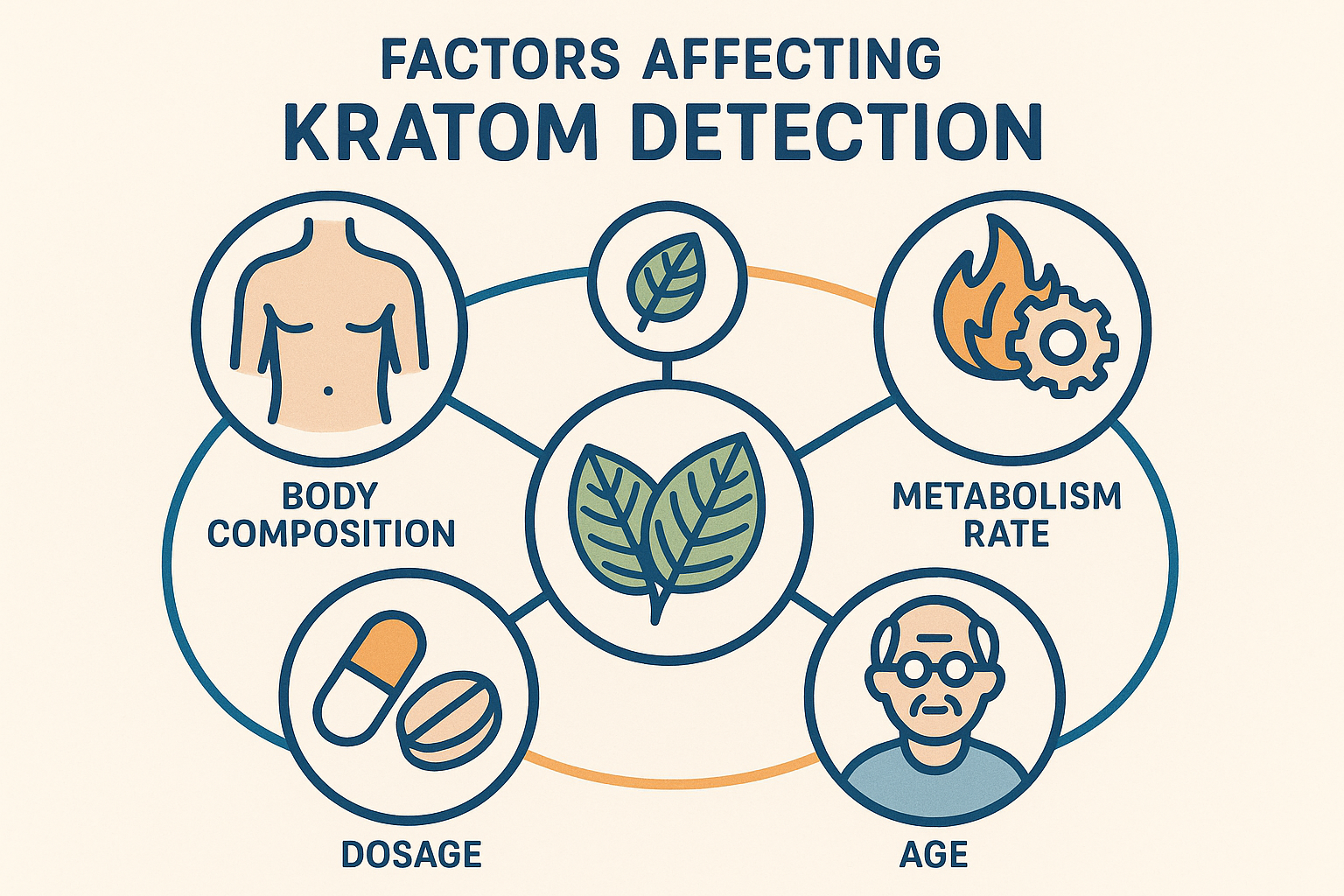
Factors Affecting Detection Time
Individual Metabolism
Metabolic rate significantly impacts how quickly kratom alkaloids are processed and eliminated. People with faster metabolisms generally clear kratom more quickly, while those with slower metabolisms may test positive for extended periods.
Body Composition
- Body fat percentage: Higher body fat may store alkaloids longer
- Muscle mass: Greater muscle mass often correlates with faster metabolism
- Overall health: Better health typically means more efficient elimination
Dosage and Frequency
Higher doses and more frequent use lead to accumulation of alkaloids in body tissues, extending detection windows significantly. Quality kratom products with consistent alkaloid content help users better predict detection times.
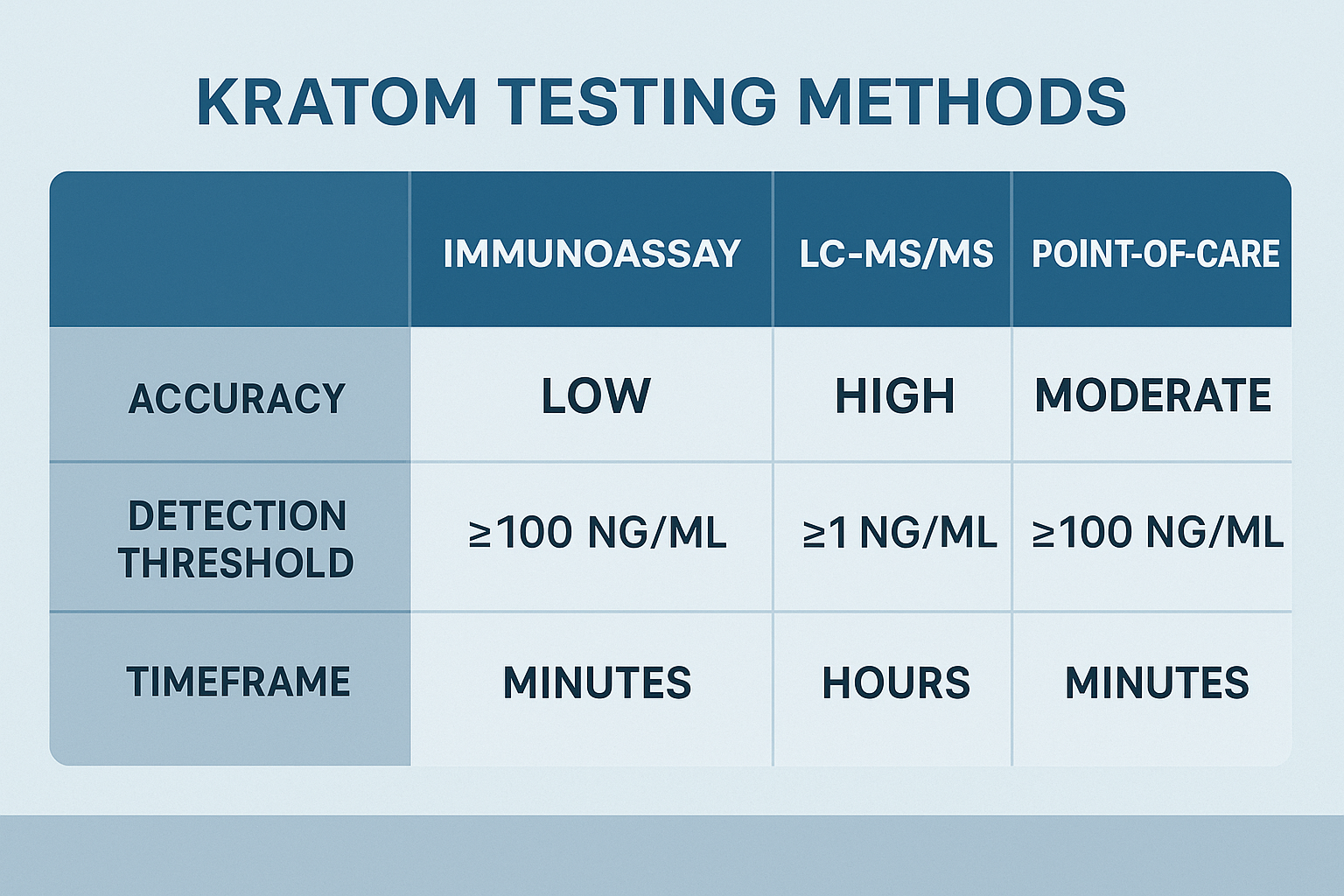
Types of Kratom Drug Tests

Urine Testing Methods
Immunoassay Screening
- Detection threshold: 1-10 ng/mL
- Results timeframe: 1-2 hours
- Accuracy: High for recent use
- Cost: Moderate
LC-MS/MS Confirmation
- Detection threshold: 0.1-1 ng/mL
- Results timeframe: 24-48 hours
- Accuracy: Extremely high
- Cost: Higher
Point-of-Care Testing
- Detection threshold: 5-25 ng/mL
- Results timeframe: 15-30 minutes
- Accuracy: Good for screening
- Cost: Lower
Specialized Kratom Testing Panels
Most employers and testing facilities don’t routinely screen for kratom unless specifically requested. However, specialized panels are available that can detect kratom alkaloids with high precision.
“Kratom testing requires specific methodologies and isn’t included in standard 5, 10, or 12-panel drug tests. Organizations must specifically request kratom testing, making detection less common than traditional substances.” – Toxicology Expert
Factors That Influence Kratom Detection
Biological Factors
Age and Metabolism
Younger individuals typically metabolize substances faster than older adults. As metabolism slows with age, detection windows may extend.
Kidney Function
Since kratom metabolites are primarily eliminated through urine, kidney health directly impacts clearance rates. Individuals with compromised kidney function may test positive for extended periods.
Liver Health
The liver processes kratom alkaloids before elimination. Liver conditions or medications affecting liver function can significantly alter detection times.
Usage Patterns
Strain Selection
Different kratom strains contain varying alkaloid concentrations. Yellow Indo kratom and other potent varieties may be detectable longer than milder strains.
Consumption Method
- Powder: Faster absorption, shorter detection
- Capsules: Slower absorption, potentially longer detection
- Extracts: Higher concentration, extended detection
Timing of Last Use
The time between last consumption and testing is crucial. Even heavy users may test negative after sufficient time has passed.
Kratom Testing in Different Contexts
Employment Screening
Most pre-employment drug screenings don’t include kratom testing due to cost and complexity. However, certain industries or positions may require comprehensive testing including kratom detection.
Industries More Likely to Test for Kratom:
- Transportation and logistics
- Healthcare and pharmaceuticals
- Government and military positions
- Safety-sensitive roles
Legal Considerations
Kratom’s legal status varies significantly by jurisdiction. In areas where kratom is legal, testing policies may be more lenient. However, in regions with restrictions, positive tests can have serious consequences.
Understanding kratom legality in your area is essential before use, especially if subject to drug testing protocols.
Athletic and Sports Testing
Some athletic organizations have begun including kratom in their prohibited substances lists. Athletes should verify their organization’s policies before using kratom products.
Strategies for Managing Detection Risk

Natural Elimination Support
Hydration
Proper hydration supports kidney function and may help eliminate metabolites more efficiently. However, excessive water consumption before testing can raise suspicions and may be detected.
Exercise and Metabolism
Regular exercise boosts metabolism and may help clear substances faster. However, intense exercise immediately before testing isn’t recommended.
Diet and Nutrition
A healthy diet supports liver and kidney function, potentially improving elimination rates.
Timing Considerations
Planning Around Tests
If testing is predictable, timing kratom use accordingly can help avoid positive results. Understanding personal elimination rates through experience is valuable.
Emergency Situations
For unexpected testing, no reliable methods exist to rapidly eliminate kratom from the system. Time is the only guaranteed solution.
Common Myths and Misconceptions
Myth: Standard Drug Tests Detect Kratom
Reality: Most standard panels don’t include kratom testing. Specific testing must be ordered.
Myth: Detox Products Eliminate Kratom
Reality: No scientifically proven products can rapidly eliminate kratom alkaloids from urine.
Myth: Kratom Detection is Unreliable
Reality: Modern testing methods are highly accurate when properly conducted.
Myth: Legal Status Prevents Testing
Reality: Even where legal, employers may still test for kratom and take action based on results.
Interactive Detection Timeline Calculator
🧪 Kratom Detection Timeline Calculator
Estimate detection windows based on usage patterns and individual factors
Medical and Health Considerations
Potential Health Impacts of Kratom Use
Understanding how long kratom stays in urine is just one aspect of responsible use. Regular kratom consumption can affect various body systems, and users should be aware of potential health implications.
Liver Function
Prolonged kratom use may impact liver enzymes and function. Regular users should consider periodic liver function testing, especially when using high-quality kratom products consistently.
Kidney Health
Since kratom metabolites are eliminated through the kidneys, maintaining kidney health is crucial for proper elimination and overall well-being.
Drug Interactions
Kratom can interact with various medications, potentially affecting both efficacy and elimination rates. Always consult healthcare providers before combining kratom with prescription medications.
Age-Related Considerations
The question of how old you have to be to buy kratom varies by jurisdiction, but age also affects detection times. Younger users typically metabolize substances faster, while older adults may have extended detection windows.
Legal Landscape and Testing Policies
State-by-State Variations
Kratom’s legal status continues to evolve across different jurisdictions. Some states have implemented age restrictions, while others have banned kratom entirely. Understanding local kratom laws is essential before use.
States with Kratom Restrictions:
- Complete bans in several states
- Age restrictions (18+ or 21+) in others
- Regulated sales in some jurisdictions
- Pending legislation in various states
Workplace Policies
Employers are increasingly developing specific policies regarding kratom use. Even in states where kratom is legal, employers may prohibit use and test accordingly.
Common Workplace Scenarios:
- Pre-employment screening
- Random testing programs
- Post-accident investigations
- Reasonable suspicion testing
Cost Considerations for Testing
Understanding how much kratom costs is important, but testing costs also factor into the equation. Specialized kratom testing is more expensive than standard drug panels, which may influence testing frequency and policies.
Testing Cost Factors:
- Laboratory fees for specialized analysis
- Sample collection and handling
- Confirmation testing requirements
- Legal and administrative costs
Alternative Kratom Products and Detection
Different Kratom Forms and Their Impact
Various kratom products may affect detection times differently. Kratom drinks and liquid formulations may be absorbed faster than traditional powder, potentially affecting elimination rates.
Product Types and Characteristics:
- Powder: Standard absorption and elimination
- Capsules: Slower absorption, potentially longer detection
- Extracts: Higher concentration, extended detection
- Liquids: Faster absorption, variable elimination
Strain-Specific Considerations
Different kratom strains contain varying alkaloid profiles. Gold Indo kratom and other premium strains may have different detection characteristics based on their unique alkaloid compositions.
Best Practices for Kratom Users
Responsible Use Guidelines
Documentation and Tracking
- Keep records of usage patterns
- Note strain types and dosages
- Track timing relative to potential testing
- Monitor personal response patterns
Health Monitoring
- Regular health checkups
- Liver function testing
- Kidney function assessment
- Blood pressure monitoring
Risk Mitigation Strategies
Professional Consultation
Always consult healthcare providers before starting kratom use, especially if subject to drug testing or taking medications.
Legal Compliance
Stay informed about local laws and workplace policies regarding kratom use and testing.
Quality Assurance
Use only reputable kratom vendors that provide lab-tested products with consistent alkaloid content.
Technological Advances in Kratom Testing
Emerging Testing Methods
Testing technology continues to evolve, with new methods offering increased sensitivity and accuracy. These advances may affect detection windows and testing protocols.
Current Developments:
- Improved mass spectrometry techniques
- Faster screening methods
- Lower detection thresholds
- Enhanced metabolite identification
Laboratory Capabilities
Modern laboratories can detect kratom alkaloids at increasingly low concentrations, potentially extending effective detection windows beyond traditional estimates.
Frequently Asked Questions About Kratom Detection
Kratom can typically be detected in urine for 1-7 days after last use. The exact timeframe depends on factors like dosage, frequency of use, metabolism, and individual body composition. Heavy users may test positive for up to a week or longer.
Kratom requires specialized testing and is not detected by standard drug panels. Specific tests include urine tests, blood tests, hair follicle tests, and saliva tests. Most employers use standard 5 or 10-panel tests that do not screen for kratom.
Key factors include dosage amount, frequency of use, individual metabolism rate, body fat percentage, age, kidney and liver function, hydration levels, and overall health. Regular users typically have longer detection windows than occasional users.
While you cannot dramatically speed up elimination, staying well-hydrated, maintaining good kidney and liver health, exercising regularly, and eating a healthy diet may help support your body’s natural detoxification processes.
Kratom legality varies by location. In most US states it’s legal, but some states and municipalities have banned it. Standard employment drug tests typically don’t screen for kratom unless specifically requested, but policies vary by employer.
Specialized kratom tests are generally accurate when performed correctly. However, false positives are rare, and the tests specifically look for mitragynine and 7-hydroxymitragynine, the primary alkaloids in kratom. Laboratory confirmation is typically used for definitive results.
International Perspectives on Kratom Testing
Global Regulatory Approaches
Different countries have varying approaches to kratom regulation and testing, affecting international travel and employment considerations.
International Considerations:
- Complete prohibition in some countries
- Regulated medical use in others
- Varying testing protocols and thresholds
- Travel restrictions and considerations
Conclusion
Understanding how long kratom stays in urine requires considering multiple factors including usage patterns, individual physiology, and testing methods. While detection windows typically range from 2-9 days, individual circumstances can significantly affect these timeframes.
The key factors influencing kratom detection include:
For those subject to drug testing, the safest approach is complete abstinence from kratom use. No reliable methods exist to rapidly eliminate kratom alkaloids from the system, making time the only guaranteed solution for avoiding positive test results.
Olivia is a natural culture enthusiast who studies the role of plants in shaping stories, traditions, and heritage. She enjoys uncovering how people throughout history have relied on the natural world for meaning, symbolism, and connection. Olivia is drawn to the educational side of these practices, encouraging thoughtful exploration of cultural traditions. Her approach is grounded in curiosity and authenticity, aiming to preserve the timeless relationship between people and nature.