

Looking for Authentic Kratom Quality?
Jack Botanicals offers AKA-approved strains including Red Maeng Da, Red Bali, and Green Maeng Da. Every batch is third-party lab tested.
First-Time Buyer Bonus: Apply JACK30 for 30% off
The Empire State stands at a crossroads regarding kratom legislation, with thousands of New Yorkers wondering: is kratom legal in New York and what does the regulatory landscape look like? While kratom remains federally unregulated, New York has taken a unique approach that affects both consumers and vendors across the state.
Is kratom legal in New York? Currently, kratom exists in a legal gray area within New York State. Unlike some states that have implemented outright bans or comprehensive regulations, New York has adopted a more nuanced approach that focuses on age restrictions and product safety standards rather than complete prohibition.
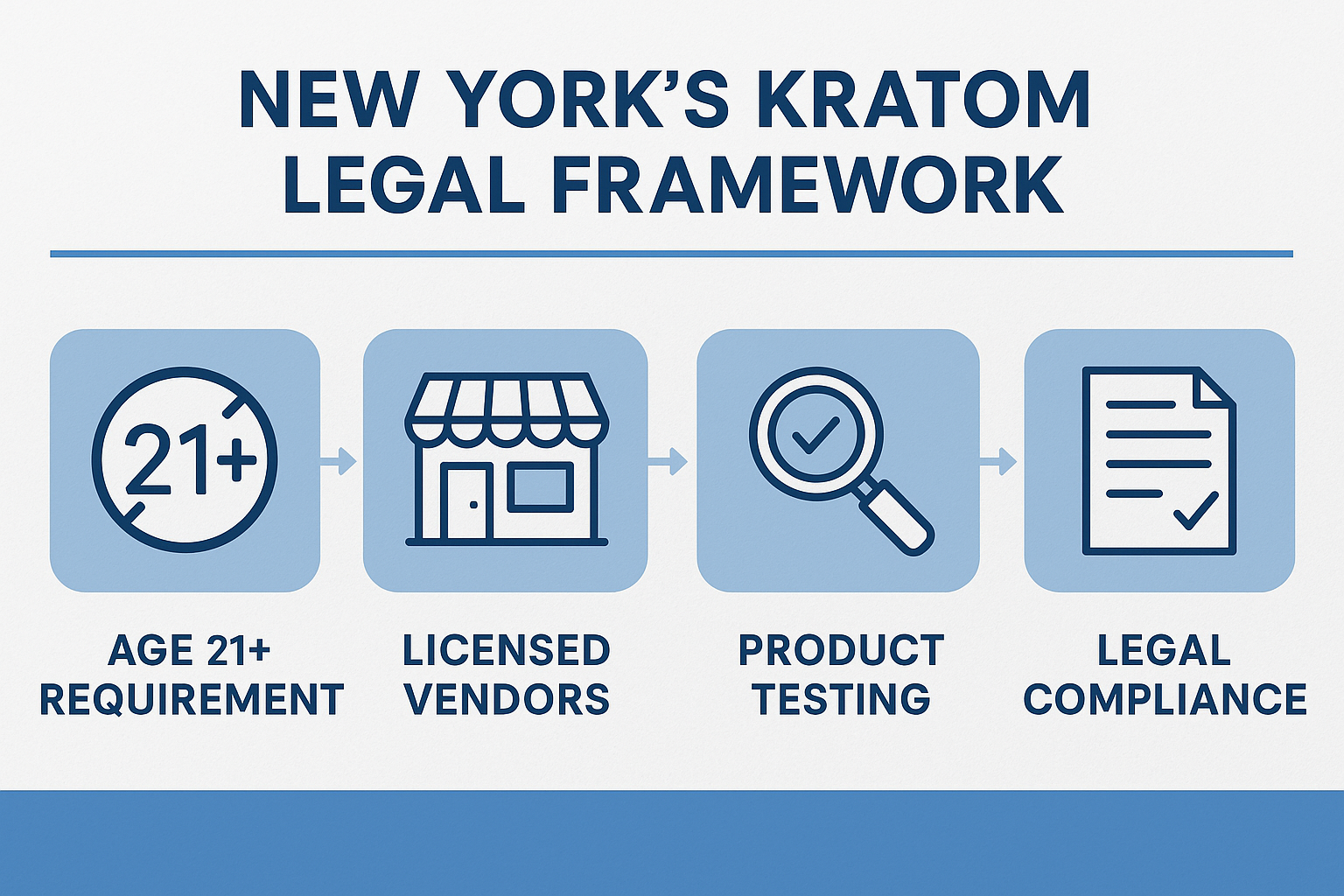
- Kratom is legal for adults 21 and older in New York State, with age verification requirements for all purchases
- Pending legislation aims to establish comprehensive regulation and quality control standards for kratom products
- Local jurisdictions may have additional restrictions beyond state-level regulations
- Product labeling and testing requirements are being developed to ensure consumer safety
- Vendors must comply with specific age verification and distribution guidelines to operate legally
Understanding New York’s Current Kratom Legal Status
The Legal Framework
New York’s approach to kratom regulation differs significantly from neighboring states. While some regions have implemented complete bans, New York lawmakers have focused on creating a controlled market that prioritizes consumer safety while maintaining access for adults.
The current legal status centers around age restrictions and product safety standards. Adults aged 21 and older can legally purchase, possess, and consume kratom products throughout New York State. This age limit mirrors regulations for other controlled substances and reflects the state’s commitment to protecting minors while preserving adult access.
Key Legal Provisions
Age Verification Requirements 📋
- All kratom sales require proof of age (21+)
- Vendors must implement robust age verification systems
- Online retailers must verify age before shipping to New York addresses
Product Safety Standards 🔬
- Kratom products must meet specific purity requirements
- Contamination testing for heavy metals and pathogens
- Clear labeling requirements for alkaloid content
Distribution Regulations 🏪
- Licensed retailers only
- Restrictions on marketing to minors
- Compliance with state tax requirements
Historical Context: How New York Arrived at Current Laws
Early Legislative Attempts
New York’s kratom legislation journey began in 2019 when initial bills proposed complete prohibition. However, advocacy groups, researchers, and constituents successfully argued for a more balanced approach that would regulate rather than ban kratom entirely.
The turning point came when lawmakers recognized kratom’s potential benefits for individuals seeking alternatives to traditional pain management and opioid addiction recovery. This shift in perspective led to the current regulatory framework that emphasizes safety and age restrictions.
Stakeholder Influence
Several key groups influenced New York’s kratom legislation:
Consumer Advocacy Groups 🗣️
- American Kratom Association (AKA)
- Local kratom consumer organizations
- Pain management patient advocates
Medical Community 🏥
- Addiction medicine specialists
- Pain management physicians
- Public health researchers
Industry Representatives 💼
- Kratom vendors and manufacturers
- Trade associations
- Quality testing laboratories
Current Pending Bills and Legislative Activity
Jack Botanicals: Premium Kratom Done Right
Why settle for less? Get AKA-certified quality with top strains: Red Maeng Da, Red Bali, Green Maeng Da
💎 Special Offer: Use code at checkout | JACK30 |
Senate Bill S.2941 and Assembly Bill A.3431
The most significant pending legislation is the Kratom Consumer Protection Act, which aims to establish comprehensive regulations for kratom products in New York. This bipartisan legislation includes:
Manufacturing Standards 🏭
- Good Manufacturing Practices (GMP) requirements
- Third-party testing mandates
- Facility inspection protocols
Product Registration 📝
- Mandatory product registration with state authorities
- Batch tracking and recall procedures
- Adverse event reporting systems
Consumer Protections 🛡️
- Clear dosage guidelines and warnings
- Prohibition of synthetic additives
- Enhanced labeling requirements
Timeline and Legislative Process
The legislative process for kratom regulation in New York typically follows this timeline:
| Phase | Duration | Key Activities |
|---|---|---|
| Committee Review | 2-3 months | Initial bill analysis, stakeholder input |
| Public Hearings | 1-2 months | Community feedback, expert testimony |
| Amendment Process | 1-3 months | Bill modifications, compromise negotiations |
| Floor Votes | 2-4 weeks | Senate and Assembly voting |
| Governor Review | 30 days | Final approval or veto |
Regulatory Requirements for Kratom Vendors
Licensing and Compliance
Kratom vendors operating in New York must navigate a complex regulatory environment. Understanding these requirements is crucial for both businesses and consumers who want to ensure they’re dealing with legitimate operators.
Business Licensing 📄
- General business license from New York State
- Sales tax registration and compliance
- Local municipal permits where required
Age Verification Systems 🆔
- Electronic age verification for online sales
- Physical ID checking for in-person transactions
- Staff training on age verification procedures
Record Keeping 📊
- Purchase and sales records
- Customer age verification logs
- Product testing documentation
Quality Control Standards
New York’s emerging regulations emphasize product quality and safety. Vendors must implement comprehensive quality control measures:
Testing Requirements 🧪
- Heavy metals screening (lead, mercury, cadmium, arsenic)
- Microbial contamination testing
- Alkaloid content verification
- Residual solvent analysis
Labeling Standards 🏷️
- Clear product identification
- Alkaloid content disclosure
- Batch numbers and expiration dates
- Warning labels and usage instructions
When purchasing kratom in New York, consumers should look for vendors who demonstrate compliance with these standards. Reputable vendors often provide certificates of analysis (COAs) and maintain transparent testing practices.
Regional Variations and Local Ordinances
County-Level Regulations
While New York State provides the overarching legal framework, individual counties and municipalities may implement additional restrictions. Understanding local ordinances is essential for both consumers and vendors.
Erie County 🏛️
- Additional vendor licensing requirements
- Enhanced age verification protocols
- Specific zoning restrictions for kratom retailers
Nassau County 🏢
- Municipal permits required for kratom sales
- Regular compliance inspections
- Consumer education requirements
Suffolk County 🌊
- Retail location restrictions
- Enhanced product testing standards
- Community notification requirements
Municipal Considerations
Local governments often focus on specific aspects of kratom regulation that align with community priorities:
Zoning Restrictions 🗺️
- Distance requirements from schools and parks
- Commercial district limitations
- Residential area prohibitions
Operating Hours ⏰
- Restricted sales hours
- Weekend and holiday limitations
- Special event considerations
Public Health Measures 🏥
- Local health department oversight
- Community education programs
- Healthcare provider notification systems
Comparison with Neighboring States

Understanding how New York’s kratom laws compare to neighboring states provides valuable context for residents and businesses operating across state lines.
Connecticut’s Approach
Connecticut has implemented similar age-based restrictions but with different enforcement mechanisms. The state requires:
- 18+ age limit (younger than New York’s 21+ requirement)
- Basic labeling requirements
- Limited testing mandates
New Jersey’s Position
New Jersey currently allows kratom sales with minimal restrictions:
- No specific age limits beyond general supplement regulations
- Basic consumer protection laws apply
- Limited state-level oversight
Pennsylvania’s Framework
Pennsylvania maintains a more restrictive approach:
- County-by-county variation in legality
- Some municipalities have implemented complete bans
- Ongoing legislative debates about statewide regulation
This patchwork of regulations across the Northeast creates challenges for consumers who travel between states and businesses operating in multiple jurisdictions. Understanding these differences is crucial for legal compliance.
Consumer Rights and Protections
Purchase and Possession Rights
New York residents aged 21 and older enjoy specific rights regarding kratom purchase and possession:
Legal Purchase Channels 🛒
- Licensed retail establishments
- Verified online vendors
- Authorized distributors
Possession Limits ⚖️
- No specific quantity restrictions for personal use
- Commercial quantities require proper licensing
- Transportation across state lines subject to destination laws
Quality Assurance Rights ✅
- Access to product testing information
- Right to refund for contaminated products
- Complaint filing procedures for regulatory violations
Consumer Safety Protections
New York’s regulatory framework includes several consumer protection mechanisms:
Product Recall Procedures 🚨
- Rapid notification systems for contaminated products
- Vendor responsibility for recall costs
- Consumer compensation protocols
Adverse Event Reporting 📞
- State-maintained reporting systems
- Healthcare provider notification requirements
- Investigation and follow-up procedures
Educational Resources 📚
- State-provided consumer information
- Healthcare provider training programs
- Public awareness campaigns
For consumers seeking reliable kratom products, it’s important to choose vendors who prioritize quality and compliance. Many consumers find success with established vendors who maintain rigorous testing standards and transparent business practices.
Impact on Kratom Businesses and Industry
Market Dynamics
New York’s regulatory approach has created a unique market environment that affects both local and national kratom businesses:
Compliance Costs 💰
- Testing and certification expenses
- Legal consultation fees
- Administrative overhead
Market Opportunities 📈
- Premium pricing for compliant products
- Consumer trust and brand loyalty
- Competitive advantages for quality-focused vendors
Operational Challenges ⚠️
- Complex regulatory navigation
- Multi-jurisdictional compliance requirements
- Ongoing legislative uncertainty
Business Adaptation Strategies
Successful kratom businesses in New York have implemented several adaptation strategies:
Quality-First Approach 🌟
- Investment in superior testing protocols
- Premium product sourcing
- Transparent manufacturing processes
Compliance Infrastructure 🏗️
- Legal and regulatory expertise
- Robust record-keeping systems
- Staff training and certification programs
Consumer Education 🎓
- Product information resources
- Usage guidance and safety information
- Community engagement initiatives
Many businesses have found that investing in quality and compliance, while initially expensive, creates long-term competitive advantages. Vendors who prioritize extract quality and safety often build stronger customer relationships and more sustainable business models.
Safety Considerations and Best Practices

Consumer Safety Guidelines
New York’s regulatory framework emphasizes consumer safety through education and product standards. Understanding best practices helps ensure safe and responsible kratom use:
Dosage Considerations 💊
- Start with minimal amounts (1-2 grams)
- Gradually increase based on individual response
- Avoid exceeding recommended daily limits
Product Selection 🔍
- Choose vendors with comprehensive testing
- Verify certificates of analysis (COAs)
- Avoid products with synthetic additives
Health Monitoring 🩺
- Regular health check-ups
- Monitor for adverse reactions
- Consult healthcare providers about kratom use
Quality Indicators
Consumers should look for specific quality indicators when purchasing kratom products:
Testing Documentation 📋
- Heavy metals analysis results
- Microbial contamination screening
- Alkaloid content verification
- Pesticide residue testing
Vendor Transparency 🔬
- Clear sourcing information
- Manufacturing process disclosure
- Customer service accessibility
- Return and refund policies
Product Presentation 📦
- Professional packaging and labeling
- Clear ingredient lists
- Proper storage instructions
- Batch tracking information
For those interested in kratom tea products, selecting vendors with comprehensive safety testing becomes particularly important given the preparation methods involved.
Enforcement and Compliance Monitoring
State Oversight Mechanisms
New York has developed several mechanisms to ensure compliance with kratom regulations:
Inspection Programs 🔍
- Regular retail establishment inspections
- Random product sampling and testing
- Compliance audits for licensed vendors
Violation Penalties ⚖️
- Warning letters for minor infractions
- Fines for compliance failures
- License suspension or revocation for serious violations
Consumer Complaint Systems 📞
- State-operated reporting hotlines
- Online complaint submission portals
- Investigation and resolution procedures
Industry Self-Regulation
The kratom industry in New York has also embraced self-regulation initiatives:
Trade Association Standards 🤝
- Voluntary quality certifications
- Industry best practice guidelines
- Peer review and accountability systems
Third-Party Certifications 🏆
- Independent quality verification programs
- Ongoing compliance monitoring
- Consumer confidence building initiatives
Collaborative Enforcement 🤜🤛
- Industry-government partnerships
- Information sharing agreements
- Joint consumer education efforts
Comparison with Federal Perspectives
DEA and FDA Positions
Understanding federal agency positions helps contextualize New York’s regulatory approach:
Drug Enforcement Administration (DEA) 🚔
- Ongoing evaluation of kratom’s scheduling status
- Monitoring of abuse potential and public health impacts
- Coordination with state regulatory efforts
Food and Drug Administration (FDA) 🏥
- Safety warnings and import alerts
- Research into kratom’s pharmacology
- Guidance on manufacturing and labeling standards
Centers for Disease Control (CDC) 📊
- Epidemiological monitoring
- Adverse event tracking
- Public health research coordination
State vs. Federal Jurisdiction
New York’s approach demonstrates how states can regulate kratom within the current federal framework:
State Authority Areas 🗽
- Age restrictions and consumer protections
- Product quality and testing standards
- Retail licensing and oversight
Federal Jurisdiction 🇺🇸
- Interstate commerce regulation
- Import/export controls
- Scheduling and controlled substance determinations
This division of authority creates opportunities for state-level innovation while maintaining federal oversight of broader public health and safety concerns.
Economic Impact and Market Analysis

Market Size and Growth
New York’s kratom market represents a significant portion of the national industry:
Market Metrics 📊
- Estimated annual sales: $15-25 million
- Active retail locations: 200-300 establishments
- Online vendor market share: 40-50% of total sales
Employment Impact 👥
- Direct employment: 500-800 jobs
- Indirect economic impact: $5-10 million annually
- Tax revenue generation: $1-2 million per year
Consumer Demographics 👤
- Primary age group: 25-45 years
- Geographic concentration: Urban and suburban areas
- Usage patterns: Pain management and wellness applications
Economic Benefits of Regulation
New York’s regulatory approach has generated several economic benefits:
Tax Revenue 💵
- Sales tax collection from legitimate businesses
- Business license fees and regulatory costs
- Economic multiplier effects in local communities
Job Creation 💼
- Retail employment opportunities
- Testing laboratory expansion
- Regulatory compliance services
Consumer Protection Value 🛡️
- Reduced healthcare costs from contaminated products
- Increased consumer confidence and market stability
- Prevention of black market activities
The state’s approach to regulation has created a framework that balances economic development with public health protection, similar to regulatory approaches seen in other states with comprehensive kratom laws.
Frequently Asked Questions About Kratom Laws in New York
Healthcare Provider Perspectives
Medical Community Engagement
New York’s healthcare community has played an important role in shaping kratom policy:
Pain Management Specialists 🩺
- Recognition of kratom’s potential benefits
- Advocacy for regulated access
- Patient safety and monitoring protocols
Addiction Medicine Experts 💊
- Research into kratom’s role in opioid addiction recovery
- Development of clinical guidelines
- Patient education and counseling approaches
Public Health Officials 🏥
- Population-level health monitoring
- Adverse event surveillance systems
- Policy recommendation development
Clinical Considerations
Healthcare providers in New York consider several factors when discussing kratom with patients:
Patient Assessment 📋
- Current medication interactions
- Underlying health conditions
- Treatment goals and expectations
Monitoring Protocols 🔬
- Regular health status evaluations
- Laboratory testing when appropriate
- Adverse event documentation
Education and Counseling 🗣️
- Safe usage guidelines
- Quality product selection advice
- Alternative treatment option discussions
🗽 New York Kratom Legal Status Checker
Find out if you can legally purchase and possess kratom in your situation
Looking Ahead: What to Expect
Legislative Developments
New York’s kratom regulatory landscape continues to evolve as lawmakers, industry stakeholders, and public health officials work together to refine the existing framework:
Upcoming Legislative Sessions 🗓️
- Continued refinement of age verification requirements
- Enhanced product testing standards
- Expanded consumer protection measures
Regulatory Improvements 📈
- Streamlined licensing processes for compliant vendors
- Improved enforcement mechanisms
- Enhanced inter-agency coordination
Industry Maturation 🌱
- Increased standardization across vendors
- Professional trade association development
- Research collaboration expansion
Conclusion
Is kratom legal in New York? The answer is yes, with important conditions. New York State has established a comprehensive regulatory framework that allows kratom access for adults 21 and older while implementing robust safety measures and quality controls.
The Empire State’s approach to kratom regulation represents a balanced solution that addresses public health concerns while preserving consumer choice. Through age restrictions, product testing requirements, and vendor licensing, New York has created a model that other states continue to study and adapt.
Rachel is an explorer of traditional plant uses and cultural heritage. Her fascination with history has led her to study how plants have influenced human expression, from ceremonies to daily life practices. Rachel believes that understanding these connections can help people appreciate the richness of diverse cultures. She is passionate about sharing insights that encourage mindfulness, respect for nature, and a deeper connection with the earth’s traditions